
Sanchild Foundation · 2026–2050
Peace begins inside people.
So does the future.
A safe, harmonious, compassionate space for every person shaped by trauma – so each one feels they belong to something greater, and can build their greatest dreams by 2050.
The moment
The fighting stops. The trust does not come back.
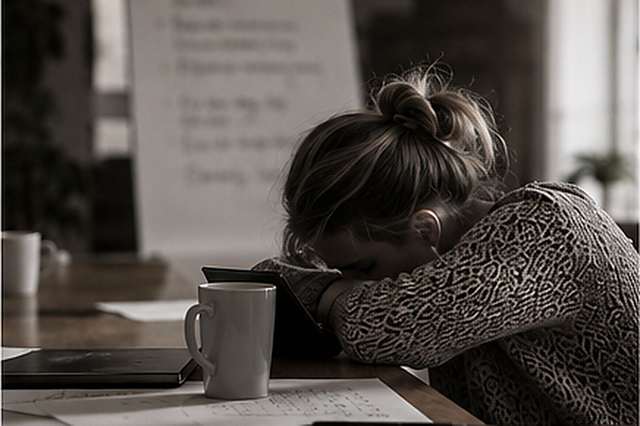
Somewhere tonight a mother is teaching her child that the neighbours cannot be trusted. A young man is inheriting a war he did not fight. A teacher is wondering whether hope is still allowed.
And for the first time in a decade, people are going home. 2025 brought the largest wave of returns in UNHCR’s history. Millions walked back into towns where the guns had gone quiet and nothing else had changed. One in every seventy people alive is still displaced.
The world does not lack for peace agreements. It lacks for people who feel that they belong to one another. Trauma has become the invisible architecture of public life – carried in bodies, passed between generations, felt everywhere and named almost nowhere.
Peace that arrives only through governments stops short of the layer where the wound actually lives. The Harmony Project began, more than a decade ago, at that layer. Not with a programme. With a person.
Most of the people we work with are not asking to be rescued. They are asking to matter.
The Harmony Project · Concept Note
A decade of practice, not a pilot idea
Delivered across the Western Balkans since 2015, and independently evaluated by researchers at the Geneva Graduate Institute.
What it takes
The world spends more on war before breakfast.
Global military expenditure reached a record 2.9 trillion US dollars in 2025. Peacebuilding receives half of one per cent of it. Meanwhile the economic impact of violence reached 21.8 trillion dollars – 10.5 per cent of global GDP, and 2,657 dollars for every person alive.
Taking Harmony to the world – every country, every certified trainer, every Ripple Project, an institute endowed in perpetuity – costs roughly what the world spends on its militaries in a single hour. On the Institute for Economics and Peace’s own model, each dollar placed in peacebuilding returns sixteen.
The missing piece
Peacebuilding funds the room. Not the people in it.
Institutions, dialogue and infrastructure all matter. But peace holds only when the people inside those institutions have somewhere to put the trauma, fear, shame and mistrust they carry to work each morning.
Healing before development
We start where the wound is, not where the logframe is. Nothing built on untreated trauma stays built.
Belonging before action
People act for a community they feel part of. Belonging is not the reward for peace. It is the mechanism.
The community as author
Communities do not need more locally-labelled projects designed elsewhere. They need the capacity to transform themselves.
How it works
The deepest peace is not negotiated. It is remembered.
Our method is not a curriculum. It adapts to the people and the community in front of it. What holds everywhere we go is the principle: healing before development; belonging before action; the community as the author of its own transformation.
Many participants arrive carrying years of unspoken trauma. They have learned to function, but not to heal. Through Train-the-Trainer each one becomes a multiplier, and alumni-led Ripple Projects carry the work into their own towns, in their own language, for their own people. What we hand over is not a programme. It is the capacity of a community to mend itself, and to teach the next community how.
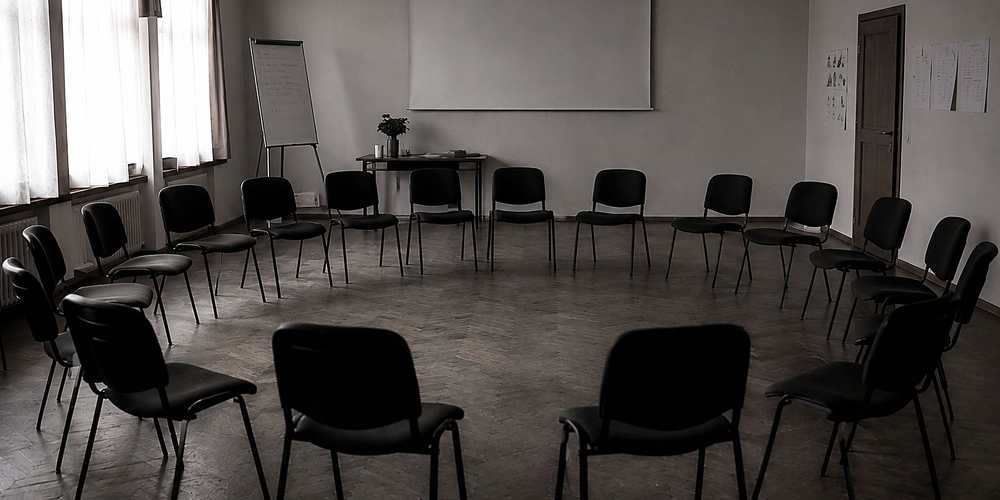
Trauma-informed work and emotional safety. For many participants, the first room in years where nothing had to be performed.
Resilience, self-awareness, and the ability to stay in a hard conversation without walking out of it.
Ten to twelve projects per cohort, chosen by the community, answering needs it named itself.
Trust, empathy and social cohesion, held by the people who live there after everyone else has gone.
What one pilot includes
Six moves, in order.
Every pilot runs the same six moves and adapts everything inside them. The architecture draws on the Geneva Graduate Institute research on participant selection, local adaptation, follow-up and ownership.
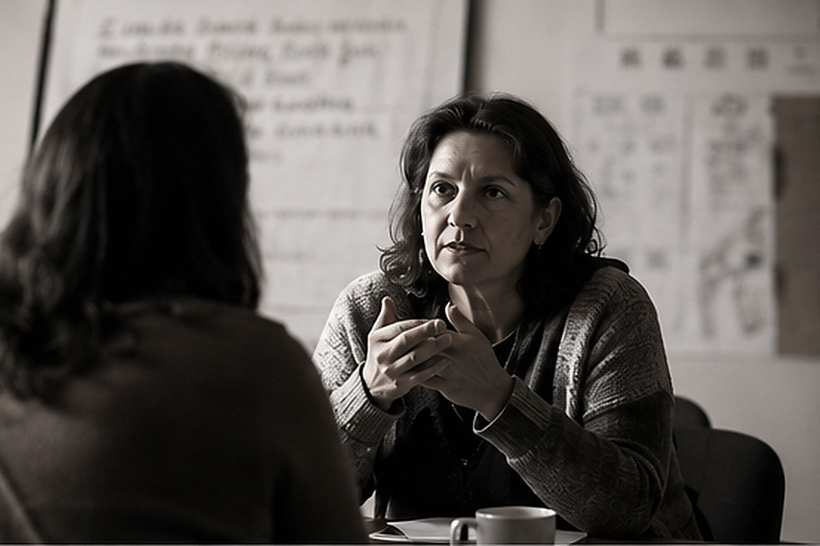
- 1
Understand
Needs, priorities and existing resources identified with local partners, before anything is designed.
- 2
Partner
Local organisations, Rotary and Rotaract networks and local representatives carry outreach and logistics.
- 3
Select
Around twelve changemakers from education, youth work, social work, psychology and community leadership.
- 4
Experience
Five days of intensive, locally adapted training led by international Harmony coaches.
- 5
Activate
Ten to twelve Ripple Projects, responding to needs the community itself identified.
- 6
Sustain
Three to six months of mentoring, peer learning, alumni connection and evaluation.
Ripple in Action
Mental Health Matters carried Harmony into schools: twelve workshops, eight schools, five cities, on mental health awareness, emotional regulation and teacher support. Around 180 people directly. More than 500 beyond them.
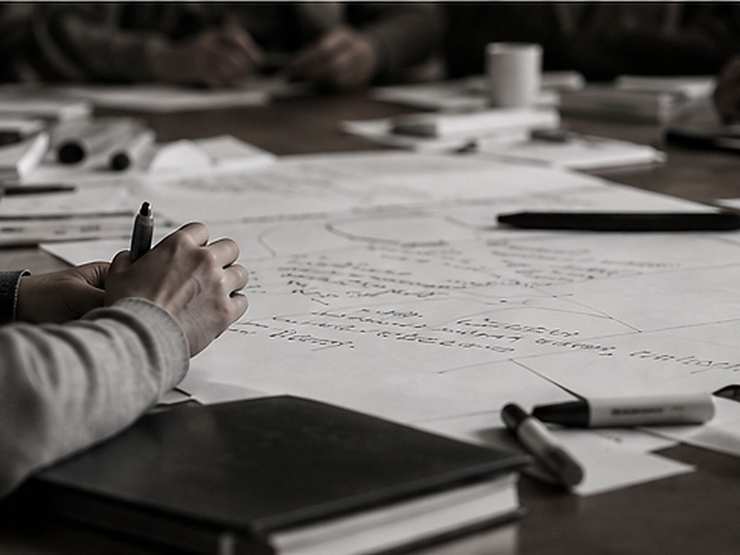
A voice from 2028
“Like many, I believed peace was something governments negotiated. Now I understand peace begins inside people. Our community leaders no longer wait for outside powers to solve our problems. Because someone believed in us, we now believe in ourselves. Our children are growing up where trust has become normal instead of fear. And now we are helping other communities do the same.” A Harmony community leader · two years from now

Rotary People of Action: Champion of Peace, 2024–25
Who is behind it
The wound, fully embraced, becomes the antidote.
Sanela M. Lee was born near Srebrenica in 1982. She lived the war. She knows what it is to be hidden in forests, moved between refugee camps, and rebuilt in a country not her own. She lives in Switzerland.
She also knows what only those who have walked that road can know. She has spent fifteen years turning that knowing into a method, and the method into a community – joined by practitioners, alumni-turned-trainers, Rotary partners, a former ambassador, and academic collaborators in Geneva.
Live now
Three pilots. One foundation.
Kosovo and Albania
Confirmed · October 2026
Implementation agreed following discussions with the District Governor. Local preparation is under way.
Serbia and Montenegro
In discussion · end 2026
Two local youth representatives identified. Partnership and implementation planning are progressing.
Morocco or Switzerland
In discussion · to be confirmed
The third context will be selected on local need, partnership strength and implementation readiness.
The road to 2050
Three stages. Twenty-four years.
Each stage is complete in itself and makes the next one possible. Support can be directed to a whole country, or to any single component of the work.
The first ten countries. Certified local trainers. The digital platform and the evaluation spine.
Ten communities running Ripple Projects designed by and for them.
Thirty countries linked by eight regional networks of Harmony Leaders. The Harmony Institute established.
Healing done in one place travels to the next through people.
Scale through Rotary, universities, governments and civil society. The Institute endowed in perpetuity.
A worldwide movement of locally led Harmony Communities.
The Digital Platform
A learning and accompaniment system supporting participants before and after the in-person programme: follow-up, peer learning, alumni connection and adaptation across countries.
The Harmony Institute
The institutional home for training, research, methodology development, retreats and the long-term practice of international positive peace.
Accountability
Every indicator ties to a named global target.
We report against our own measures and against the Sustainable Development Goal targets they serve.
| Goal | Target | How Harmony moves it | What we count |
|---|---|---|---|
| 16Peace, justice and strong institutions | 16.1 reduce violence · 16.7 participatory decision-making | Changemakers trained to hold dialogue and rebuild trust. Ripple Projects led by the community itself. | Ripple Projects · local partnerships · continuity |
| 3Good health and well-being | 3.4 promote mental health and well-being | Trauma-informed training and emotional safety. Healing before development. | Learning and well-being |
| 4Quality education | 4.7 education for a culture of peace | Train-the-Trainer certification, and Harmony carried into schools by alumni. | Participation and completion · certified trainers |
| 10Reduced inequalities | 10.2 inclusion irrespective of origin | Work across ethnic, national and religious lines, in the Balkans and beyond. | Direct and indirect community reach |
| 17Partnerships for the goals | 17.17 effective civil society partnerships | Rotary International, the Geneva Graduate Institute, the UN and local organisations in every context. | Local partnerships |
The invitation
It needs to be felt before it is funded.
This work is for philanthropists, family offices, foundations and institutions who understand that lasting peace begins with people, and who invest patiently in transformation.
If you felt something reading this, that is not incidental. That is the work. Come and see it. Meet the trainers. Sit with the alumni. Walk into a Ripple Project.